miércoles, 10 de junio de 2015

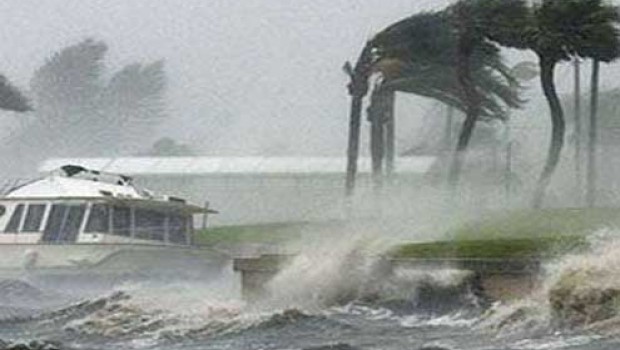
Hurricanes

San Zeno - September 3, 1930, Category 4
The eye crossed the city of Santo Domingo and left totally destroyed. Leaving behind more than 2000 dead and fifteen thousand wounded. And completely destroyed neighborhoods and places.

Ines - September 26, 1966, Category 4
Devastating hurricane that hit the Barahona peninsula with low population at that time. He erased the town of Oviedo, Pedernales, where the Eye step. At least 74 dead in the peninsula.

David - August 31, 1979, Category 5
The most powerful hurricanes that have impacted on the island. It caused about 4,000 dead, hundreds of thousands homeless and approximately $ 1 billion in losses in the agricultural sector.

It got to reach its maximum intensity with maximum sustained winds of 175 mph (280 km / h). August 31 as it passes through our island became a Category 5 hurricane's eye passed almost directly over the capital city.

Georges - September 22, 1998, Category 3
Georges brought winds, heavy rains and waves of 7 feet (2m). Almost 10 hours of continuous rain led to landslides and floods across the country, damaging many cities along the south coast, including the capital. The intensity winds 120 mph (193 km / h). Strong winds toppled trees across much of the country. Thousands of homes were destroyed, while many areas were completely flooded or destroyed by winds.

Its slow journey on the country and high rainfall destruction and deaths caused by winds and floods. 40,000 houses destroyed and a sudden flood in the lower Yaque del Sur.

Tropical storms

 rainfall up to 24 inches, were presented throughout the island for several days, a situation cat worsened the damage caused by Hurricane David a week earlier. San Cristobal being the province with major damage.

Noel - October 28, 2007
It affected Hispaniola, left extensive flooding and more than 40 deaths in the Dominican Republic. The eye of the storm passing through Port au Prince, but our country received more rain. The slow-moving storm through continuous rains caused the island between 24 and 48 hours, with sustained winds of 80 km per hour.

Olga - December 12, 2007
Tropical Storm Olga caused flooding and landslides in dozens of villages and caused 22 deaths in the Dominican Republic, two in Haiti and one in Puerto Rico. The phenomenon occurred displacement of 34,480 people and damaged 7,594 homes and left 76 villages cut off.
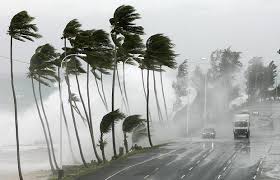
Resultado de imagen para Tropical storms
Hurcanes routes and storms

Drought

1914 - Strong drought in the north associated with El Niño warm event where the smallest decline of annual precipitation in the North Atlantic coastal plains according to data from the Puerto Plata station where rain was recorded only reached 749 millimeters.

Resultado de imagen para Drought


  Here we present some videos about natural phenomena on earth...
                                                                                                       video 1.1 

In this video we show how impressive it may be natural forces ...
                                                                                                        video 1.2

This was something about the forces of nature, nature is able to create anything, any disaster at any time ...

NATURAL PHENOMENA

                             NATURAL PHENOMENA

Natural phenomena are events that occur in nature without the direct participation of man. Among these are weather conditions, natural disasters, among others. These directly or indirectly they affect all species.
There is a belief that the term "natural phenomenon" is synonymous unusual event. However, winds, rains and the like are natural phenomena like hurricanes, tsunamis and floods.
A phenomenon of nature can be considered as natural disaster when it is harmful or destructive.

Natural DisastersWhen we use the term disaster, we refer to loss of lives and caused by events such as floods, earthquakes, tsunamis, landslides, deforestation, pollution and other materials.

They are natural phenomena that cause damage and destruction in many ways, adding to the direct or indirect human action.

Here we present an image which shows a natural disaster...

Types of Natural Disasters by origin


Disasters generated inside Earth


Earthquake tremor or earthquake: soil movements are caused by movements of the tectonic plates. Read more.

Volcanic eruption: is an opening or break in the surface of the Earth's crust that allows hot magma, ash and gases to escape from below the surface. It derives from the name of the island of Vulcano off the coast of Sicily which in turn is named after Vulcan, the Roman god of fire. Read more.
Disasters generated on the surface of the earth

Landslide: happen as a result of sudden or gradual changes in the composition, structure, hydrology or vegetation of sloping ground.The fall of a strip of land that loses its stability or destroy a structure built by man.

Avalanche or landslide: The displacement of a layer of snow, which can drag trees.
Flurry: A river of mud originated after a heavy rain or snowmelt to cause flooding, or as a result of an earthquake or volcanic eruption.
Disasters caused by meteorological or hydrological phenomena

Flood: slow or violent invasion of river waters, ponds or lakes, rivers due to heavy rainfall or dam breaks, causing considerable damage.
Drought: deficiency of moisture in the atmosphere by irregular rainfall or inadequate, inappropriate use of groundwater, reservoirs and irrigation systems.
Frost: This is a drop in the ambient temperature below the freezing point of water levels and makes the water in the air freezes into ice deposited on surfaces.
Storm: Violent Movement accompanied by atmospheric electrical discharges, strong wind, rain, snow or hail.
Hail: hail precipitation. This phenomenon occurs when rain falls frozen clouds.
Tornadoes: A column of air in violent rotation coupled with a storm cloud (cumulonimbus). It is almost always seen as a funnel-shaped cloud. Cause great damage in its path.
Huracan: it is a storm system characterized by a closed circulation around a center of low pressure and produces strong winds and heavy rain. Read more.
Tropical cyclones: they are violent and dangerous atmospheric disturbances, whose winds can reach speeds ranging from 50 to over 250 km / h. Usually they accompanied by heavy rains and huge waves and storm surges; these features tropical cyclones are extremely dangerous and cause loss of human life, animal and damage to homes, crops and property.

Disaster biological origin

Plague: A situation in which certain animals produce large-scale economic damage (health, crops, domestic animals, materials or natural resources); in the same way that the disease is not the virus, bacteria, etc.

Epidemics: the spread of infectious are a large number of people in a particular place and diseases.

More intense natural disasters that have affected the Dominican Republic.